

Introducing the GSES Meta Standard
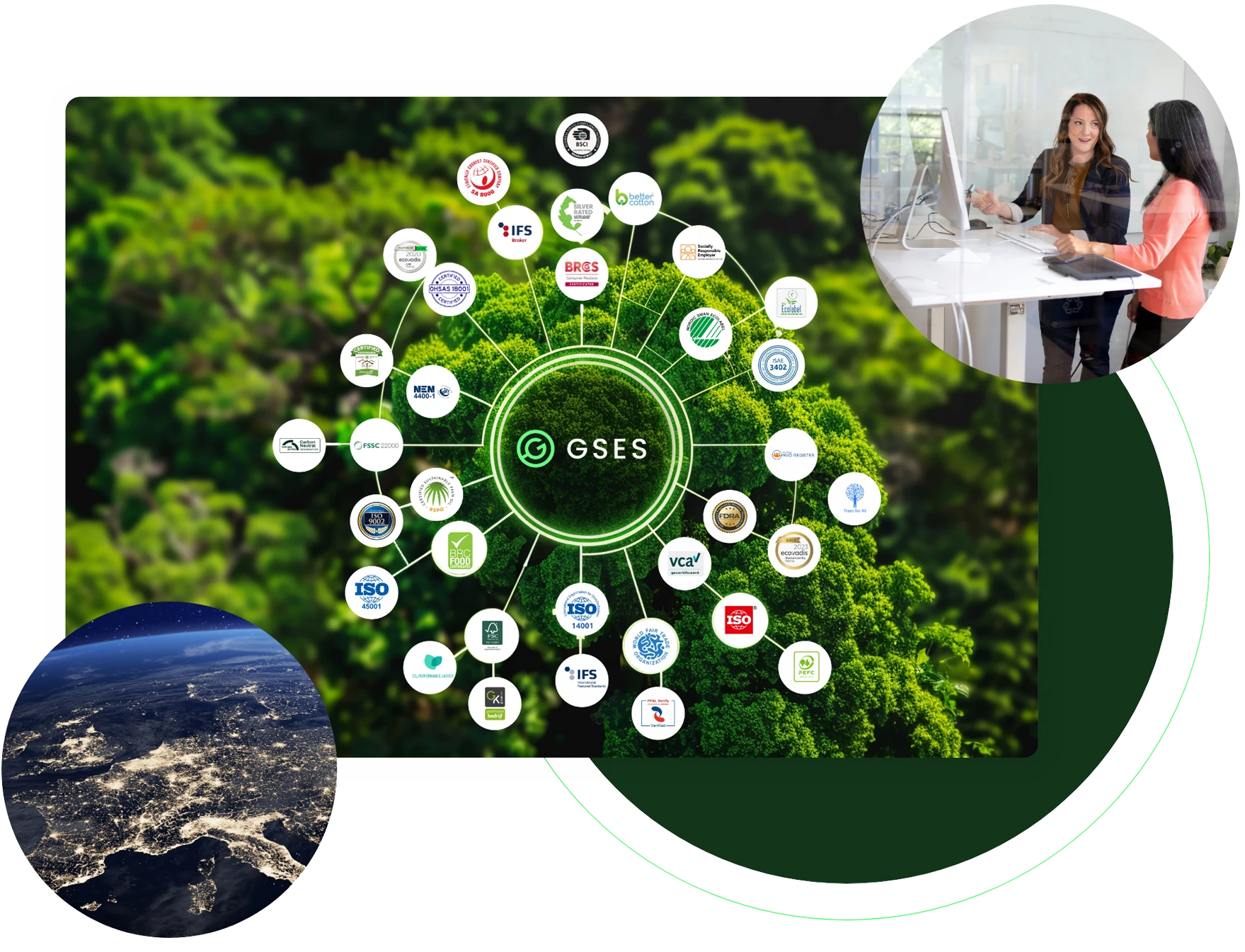
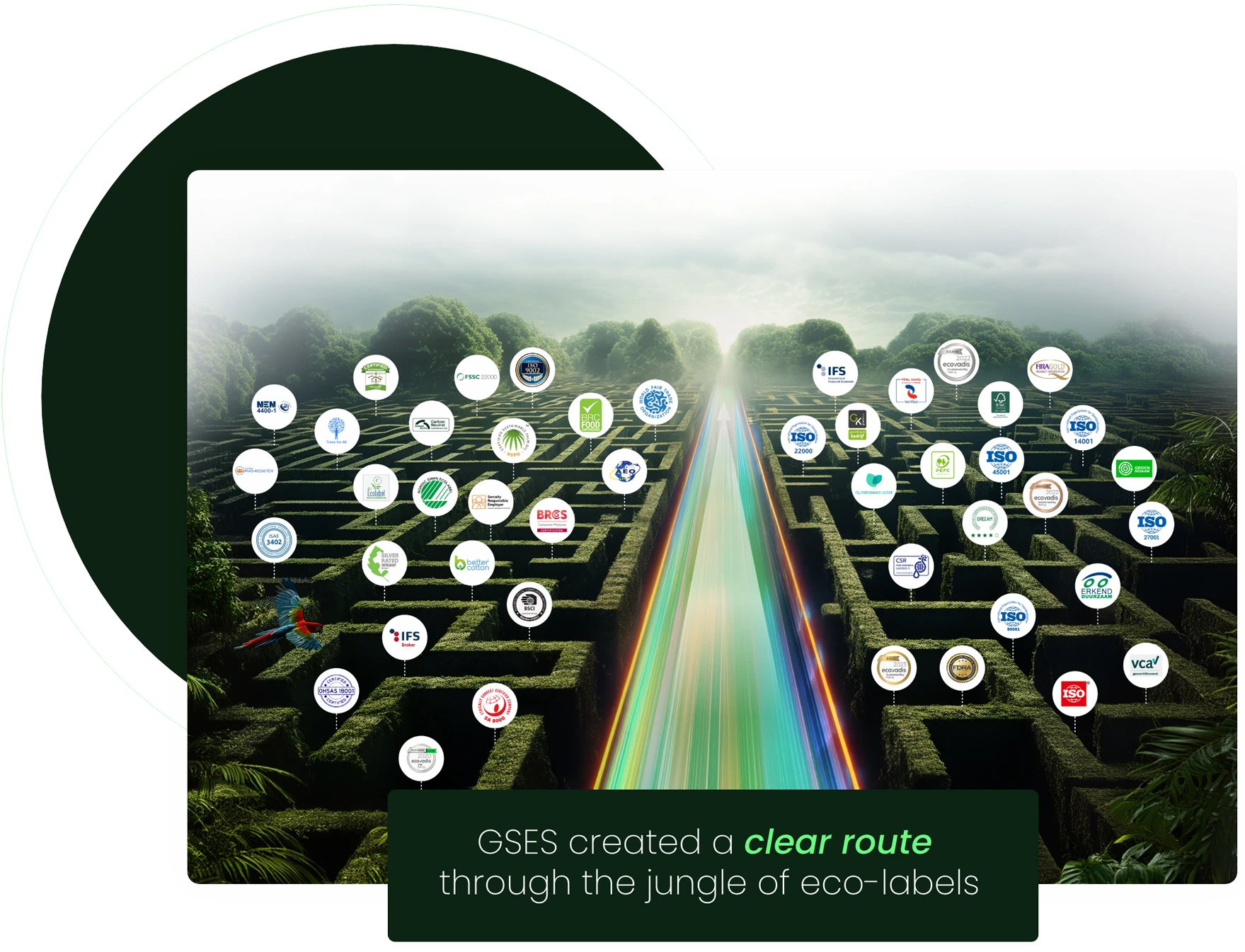
GSES was founded after extensive research on over 550 sustainability certifications and global environmental labels. By breaking down these certifications into individual criteria, we developed the GSES Meta Standard, combining the best elements of existing schemes into one powerful framework. Our expert team benchmarks each KPI against the GSES System’s guiding principles.
If you already have a certification, you can use it as a shortcut in our GSES assessments. And if you’re just starting out, our GSES pillars are here to guide you every step of the way.
The process is simple:

Upload your existing certifications to see a quick overview of your current sustainability performance.

Fill out the digital assessments on the GSES platform.

Provide additional documentation to showcase your compliance and achievements.

Your results are audited by a trusted, independent certification institution.
The certification/exemption levels
The certification/ exemption levels
The GSES Meta Standard considers certifications as exemptions on two levels:
First-line exemptions
First-line exemptions include certificates issued by independent certification bodies and overseen by a national Accreditation Council. These “yes/no” certificates or ecolabels do not use variable scoring. Once uploaded, they are quickly validated, and your organization immediately receives its baseline measurement within the GSES Platform.
Second-line exemptions
Second-line exemptions include certificates that are not independently audited or that use variable scoring methodologies. After uploading the audit report and certification evidence, these documents are verified through an independent data audit in line with GSES standards.
The House of Sustainability pillars
The Global Sustainable Meta Standard and its pillar assessments form the foundation of our House of Sustainability. This model demonstrates our holistic approach to measuring sustainability across organizations, their supply chains and products. Each pillar can be measured, verified, and certified separately, ensuring all aspects of sustainability are covered. Together, these components help organizations advance socially responsible and sustainable practices while contributing to the UN Sustainable Development Goals.
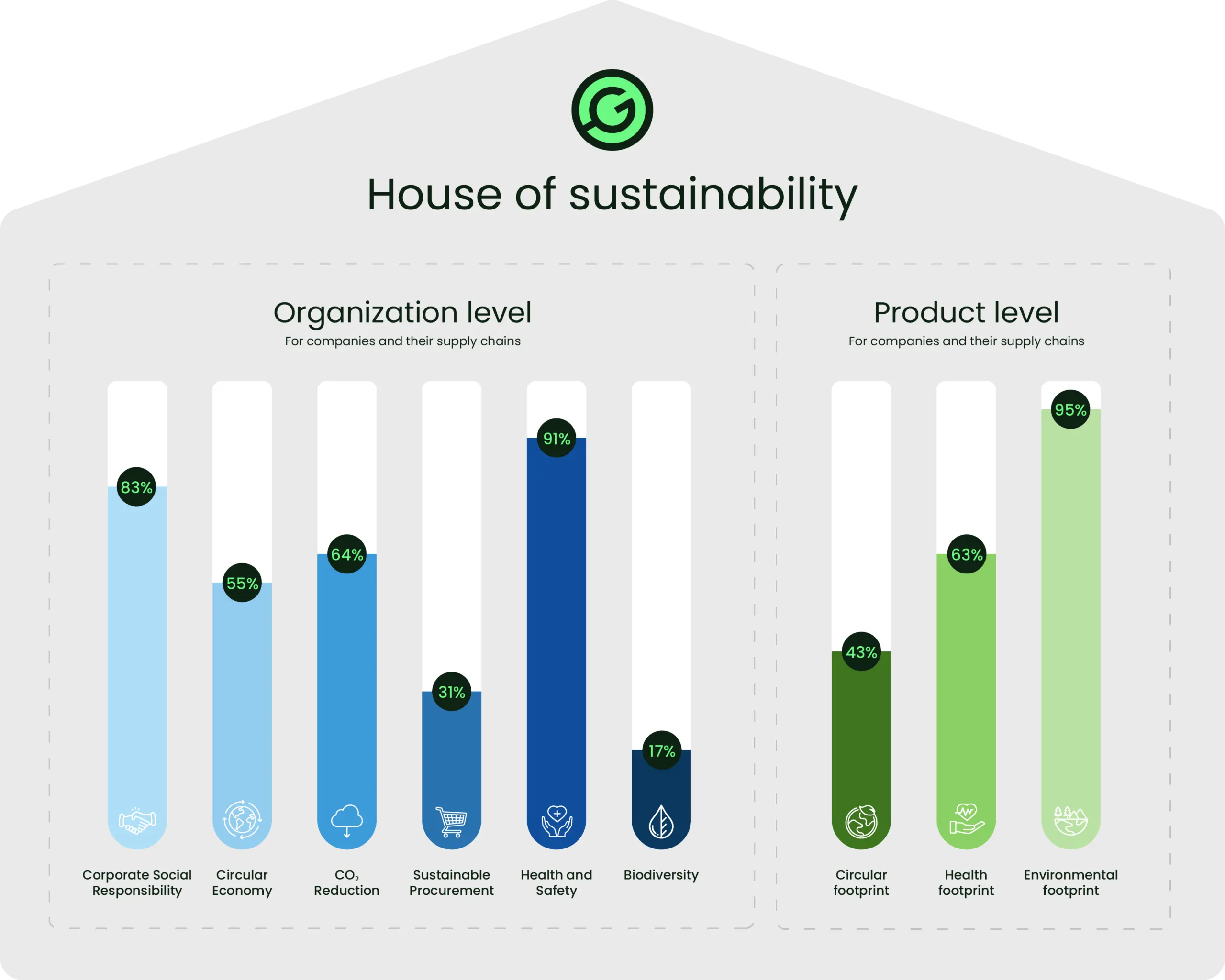
Responsibility
Economy
Reduction
Procurement
Safety
Footprint
Footprint
Footprint
The GSES benchmark translates ± 500 international ESG certificates into underlying KPIs and makes them clear and therefore comparable. Organizations without certificates can perform assessments to demonstrate sustainability performance on the same benchmark.