


Hoe ADP duurzaamheidsinspanningen omzet in meetbare impact met GSES
Hoe ADP duurzaamheidsinspanningen omzet in meetbare impact met GSES

Van groot geheim naar bewezen impact
ADP deed al jaren aan duurzaamheid maar niemand wist het. Hoe Ada Knol versnipperde initiatieven omzette in een meetbare, organisatie brede strategie. En waarom ze begon voordat de wetgeving dat vereiste.


Beluister het audiofragment
Ada Knol over duurzaamheid als bedrijfsstrategie
Duurzaamheid als goed bewaard geheim
Toen Ada Knol in 2017 haar rol als CSR Consultant bij ADP op zich nam, eerst als uitbreiding naast haar sales-functie, stuitte ze op iets verrassends. ADP deed al veel aan duurzaamheid. Maar niemand wist het.
Windenergie werd al jaren ingekocht. Er was afvalscheiding. Er was veel aandacht voor diversiteit. En toch: de initiatieven lagen verspreid door de organisatie, los van elkaar, onzichtbaar voor de rest. Geen verbinding, geen verhaal, geen meetbare impact.
“Er waren allerlei initiatieven, maar heel verspreid in de organisatie en niemand wist er eigenlijk van. Het was eigenlijk een groot geheim. Dus mijn eerste taak was om het zichtbaar te maken, om het omhoog te brengen.”
— Ada Knol
Deze situatie is herkenbaar voor veel organisaties: duurzaamheidsinspanningen bestaan, maar leven als silo’s. De uitdaging is niet altijd beginnen het is verbinden, meten en communiceren.
Van vrijwillig initiatief naar KPI op het managementdashboard
In 2019 werd Ada’s rol een betaalde functie. Niet toevallig: de druk vanuit klanten en Europese regelgeving nam toe. Maar Ada’s overtuiging was al eerder helder, intrinsieke motivatie brengt je op gang, maar KPI’s houden je op koers.
“Intrinsieke motivatie is misschien de drive om te beginnen, maar de KPI’s heb je gewoon nodig. We werken in het bedrijfsleven. Waar er KPI’s zijn, daar wordt naar gestreefd. Als dat er niet is, dan is het een nice to have.”
— Ada Knol
Dit inzicht stuurde de aanpak: duurzaamheid niet als project naast de business, maar als onderdeel van het managementdashboard. Meetbaar. Verantwoordelijk. Strategisch.
2017
Gestart met duurzaamheidsbeleid vóór CSRD-wetgeving
A+++
Energielabel van het volledig gerenoveerde kantoorgebouw
Scope 1,2 en 3: CO₂ als startpunt
De meest gevraagde rapportage? CO₂-uitstoot. ADP begon met wat het meest concreet is: het eigen wagenpark (scope 1), ingekochte energie (scope 2) en woon-werkverkeer plus zakelijke reizen (scope 3).
Medewerkers rapporteren hun woon-werkverkeer zelf via een intern systeem.
Tegelijk laat het gebouw zien wat een integrale aanpak betekent. Het kantoor 60 jaar oud, net zo lang als ADP in Nederland is, volledig gestript en herbouwd. Alleen de muren bleven staan. Nieuw glas, andere klimaatbeheersing, open kantoorinrichting, kantoormeubilair lokaal ingekocht en grotendeels gemaakt van gerecycled materiaal.
Duurzaamheid als cultuur, niet als project
Naast rapportage werkt ADP aan gedragsverandering van binnenuit. Vrijwillige medewerkersgroepen, Business Resource Groups, verbinden collega’s rondom thema’s als vrouwelijk leiderschap, persoonlijke talenten en groene initiatieven.
BRG Green deed recentelijk een oproep met drie simpele gedragsregels: zet je scherm uit als je weggaat, zet de verwarming lager en open het rolgordijn voor de planten. Klein, maar concreet. En dat is precies de aanpak: grote doelen vertalen naar dagelijks gedrag.
“Op het moment dat R&D iets vertelt over een verandering aan de achterkant van ons systeem, vraag ik: wat is de impact? Kunnen we meten hoeveel energie we daarmee besparen? Daarmee laat ik zien hoe jouw werk bijdraagt aan duurzaamheid.”
— Ada Knol
Advies voor elke organisatie: Begin gewoon
Ada’s advies voor MKB-bedrijven die niet weten waar te starten, is helder en direct:
- Begin met inventariseren: wat doe je al? Meer dan je denkt.
- Gebruik de Voluntary SME-standaard als leidraad ook als CSRD niet op je van toepassing is.
- Stel elk jaar één concrete verbeterdoelstelling vast en pak die aan.
- Maak duurzaamheid onderdeel van je KPI’s , anders blijft het een nice to have.
- Behandel rapportage niet als jaarlijkse sprint, maar als continu proces.
- Denk in zeven generaties: welk besluit neem ik nu dat mijn achterkleinkinderen nog ten goede komt?
Dat laatste, denken in zeven generaties, is voor Ada meer dan een metafoor. Het is een filosofisch ankerpunt dat tegengewicht biedt aan de kwartaaldynamiek van het bedrijfsleven.
“Als ik nu een boom plant, dan heb ik daar eigenlijk weinig plezier meer van. Maar mijn achterkleinkinderen juist wel.”
— Ada Knol
Share this post
"Je doet waarschijnlijk al meer dan je denkt"
- Ada Knol

Bewijs uw groene claims met geverifieerde gegevens.
Creëer en volg behaal uw duurzaamheidsdoelen.
Zorg dat u voldoet aan de regelgeving met eenvoudige, geverifieerde gegevens.
GSES helpt je het te meten, te onderbouwen en te communiceren zonder greenwashing.


EUDR Update (2026) – Key Changes and Clarifications
EUDR Update (2026) – Key Changes and Clarifications
04 May 2026
The European Commission released updated Guidance and FAQ documents relating to EUDR, as well as the proposed Delegated Act amending Annex I of the regulation.
Product Scope
The draft Delegated Act proposes the addition of selected products, such as soluble coffee and some palm oil derivatives (notably soap made with palm oil), and the removal of leather (hides and skin) and retreated rubber tyres from Annex I of the regulation.
The draft further clarifies that the following categories remain out of scope of the regulation:
- Bamboo, rattan, and other materials of a woody nature;
- Single use packaging and packaging material used exclusively to support, protect, or carry another product;
- Packaging materials/containers suitable for repetitive use;
- Waste, used, and second-hand products;
- Including products which are made entirely from recycled or recovered material;
- Marketing and information materials accompanying another product, or supplied for marketing or information purposes free of charge.
This draft Delegated Act is currently open for public feedback until 1 June 2026.
Clarification of obligations for downstream operators and traders
Downstream actors must collect and keep information as it relates to their direct business partners, e.g. name, postal address, email address, etc; this information is to be collected and kept outside of the EUDR information system.
Only when the direct supplier of a downstream actor is an operator, making said downstream actor a first downstream operator or trader, must the DDS reference numbers of the relevant products also be collected and retained. The obligation to pass along the reference numbers lies with the operator.
Non-SME downstream operators and traders must still register in the Information System and verify that due diligence was exercised for relevant products, before making available/placing relevant products on the market.
Legality criterion
To support compliance with Article 9(1)(h), the Commission will set up repositories of relevant legislation of the country of production and of certification schemes. Operators may use the information provided in the repositories as the basis for determining if further examination and information collection is required.
Two repositories will be established:
- Listing relevant legislation of the country of production
- Listing certification schemes applicable to EUDR-relevant commodities
The repositories will be hosted on dedicated websites which the Commission plans to launch by December 2026.
Information System
The Information System has been temporarily closed and is slated to be reopened in June 2026 (training and production environments).
The main functionalities being introduced include:
- Submission of simplified declarations following existing DDS format
- Registration of roles (e.g. non-SME downstream operator or trader)
- Mechanisms to support competent authorities in analyzing geolocation data
Updates to the system will be ongoing throughout the summer, and will include new user instructions, guidance on geolocation data handling, and the description of error codes.
Share this post
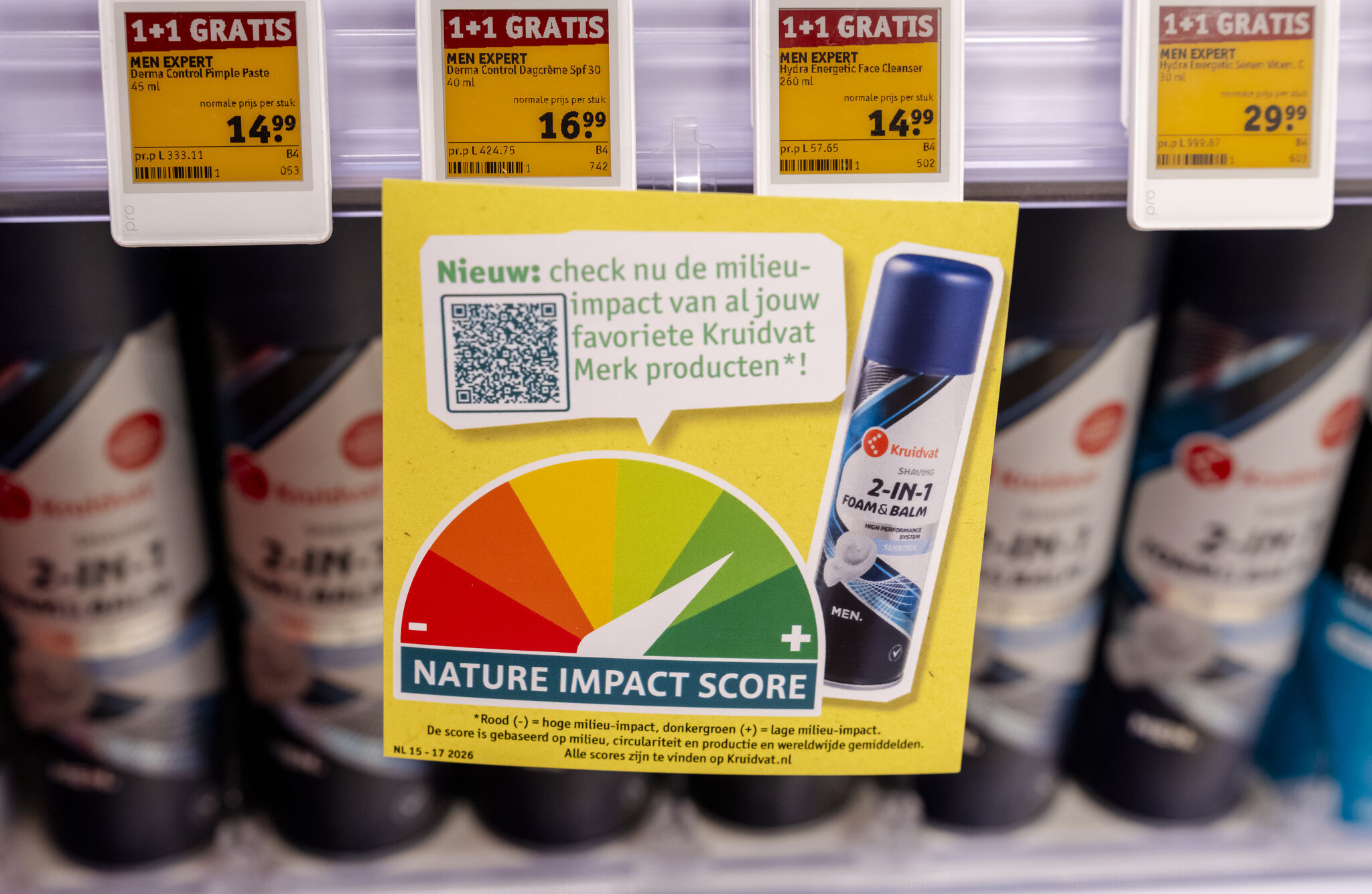
Kruidvat and Trekpleister introduce Nature Impact Score as standard for sustainability transparency in products
Kruidvat and Trekpleister introduce Nature Impact Score as standard for sustainability transparency in products
7 April 2026
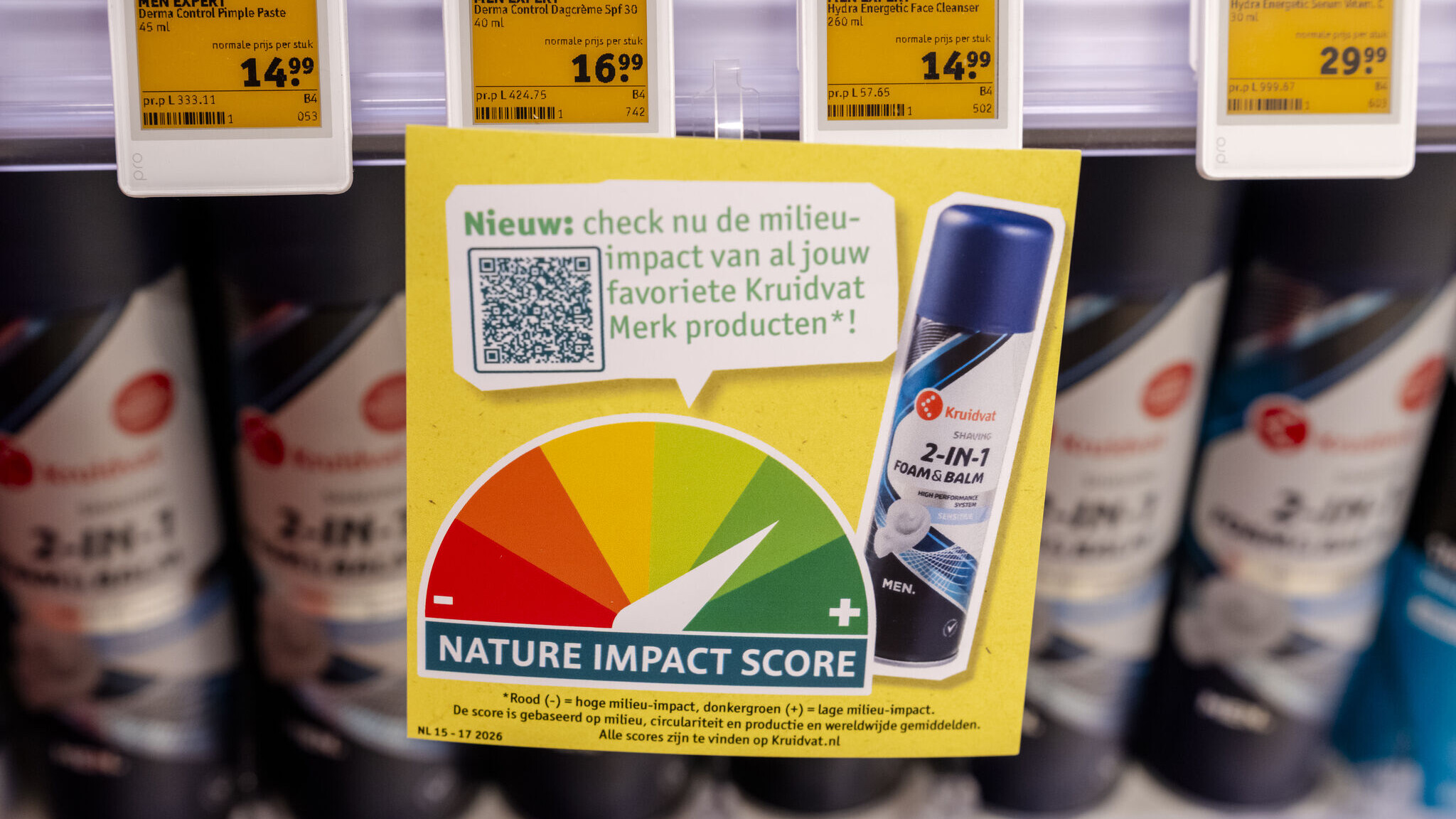
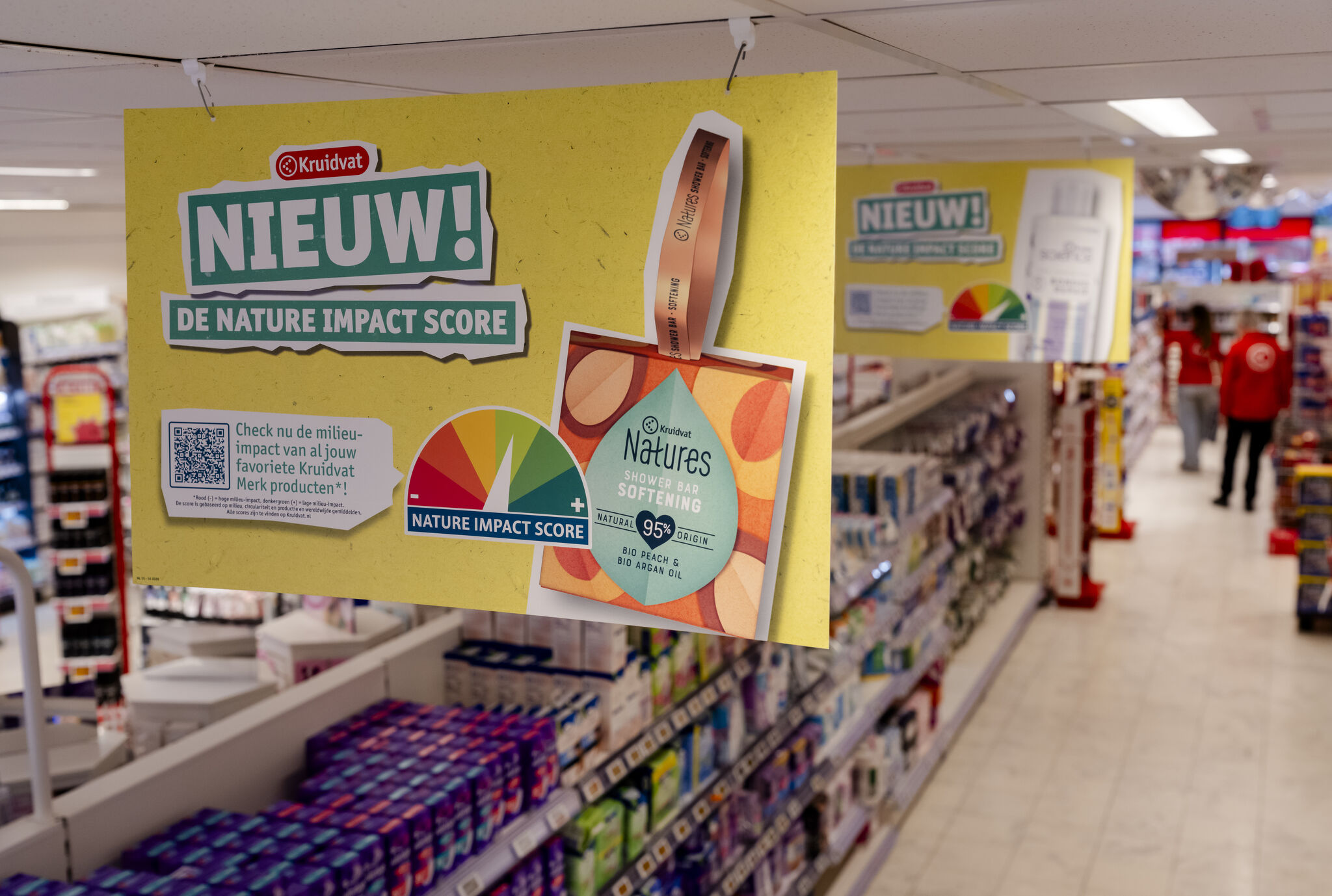
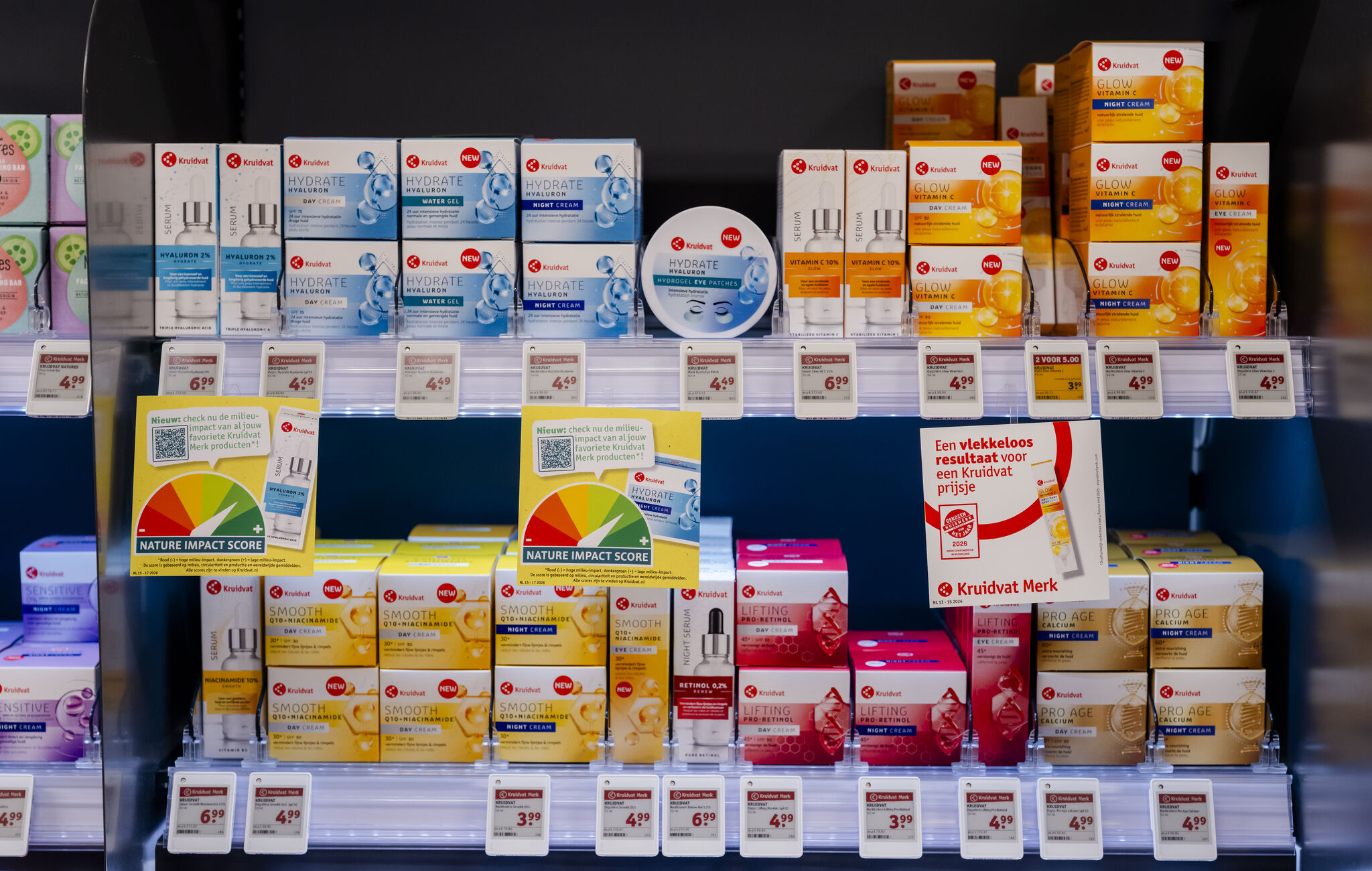
Today, AS Watson Health & Beauty Benelux, the parent company of drugstore chains Kruidvat and Trekpleister, launches the Nature Impact Score. The score shows the environmental impact of products at a glance.
With the Nature Impact Score, AS Watson shows its ambition to increase transparency in sustainability by adopting a single independent and universal standard. The company is also calling on the retail sector to embrace the methodology as an industry-wide standard.
The Nature Impact Score is based on the internationally recognized GSES methodology and is already being applied to around one thousand own-brand products. The score is clearly visible both in physical stores and across online channels. Ed van de Weerd, CEO of AS Watson Health & Beauty Benelux: “With the Nature Impact Score, we demonstrate within our trusted value-for-money proposition that sustainability does not have to be complicated. The score provides transparency, making it easier for customers to make their own informed choices. More sustainable options thereby become accessible to everyone. Together with GSES, we are driving the improvement of product impact.”
Actual product impact
The Nature Impact Score is displayed as a color (ranging from red to dark green) and provides insight into the negative environmental impact of a product, measured from the extraction of raw materials through to the point at which the product arrives in store. The score is composed of three sub-scores: environment (the impact on air, water and soil), circularity (how effectively materials are used, reused and recycled), and production footprint (the effects of substances released during production and transport on people and the environment). The three sub-scores are then combined with equal weighting into a single final rating. The Nature Impact Score distinguishes itself through its uniformity and simplicity, offering a fair and complete picture of a product’s actual environmental impact.
Van de Weerd: “By embracing a uniform standard such as the Nature Impact Score, AS Watson makes transparency around sustainability the obvious choice. As a market leader, we set the benchmark by demonstrating to the industry that sustainability is not a niche pursuit, but an achievable and accessible standard for millions of customers every week. At the same time, we recognize that our impact will be even greater if we can move beyond the vast number of existing quality marks. Consistent information for consumers is only possible if the entire sector speaks the same language.”
Independent and verifiable with GSES
GSES (Global Sustainable Enterprise System) is an international open standard that assesses organizations and products on their sustainability performance. All data is independently verified and certified, ensuring a reliable and transparent outcome. Each product is reassessed every two years to keep scores current.
Kelly Ruigrok, founder and CEO of GSES: “We are proud of our collaboration with AS Watson and delighted that the first results, after years of intensive work together, are now visible at Kruidvat and Trekpleister. AS Watson demonstrates that it takes sustainability seriously and makes it easier for consumers to choose sustainably through honest and transparent information about the impact of products.”
Share this post

Interview with director Roel Laban about Sustainabuild Collective
Interview with director Roel Laban about Sustainabuild Collective

24 Februari 2026
“We are creating a single access point for sustainability data in construction.” That’s how Roel Laban, director of Sustainabuild Collective (SBC), summarizes the ambition.
Sustainability demands are rapidly increasing in the construction sector: contractors want to calculate with CO₂ data, clients require substantiation, and manufacturers and distributors are confronted with countless lists and portals from all directions.
One access point for sustainability data in the construction value chain
Sustainabuild Collective (SBC) is a market initiative of building materials wholesalers and purchasing organizations in the Netherlands and Belgium. Its goal: one uniform way to share sustainability data across the value chain, based on the existing GSES platform non-profit and with the entire value chain involved.
“We deliberately structured SBC as a foundation, so it truly becomes a joint, market-driven initiative for and by the sector,” says Roel Laban.
In this interview, Steven van de Cruijs (Communications Manager at Koninklijke Hibin) speaks with Roel Laban, Director of SBC, about who SBC is for, how it works, what it costs, and what it delivers for producers, traders, and contractors. Before discussing pricing later in the interview, they first outline the key building blocks of the initiative.
One uniform route
Who is Sustainabuild Collective for, and what problem does it solve?
Roel: SBC focuses on three key roles in the construction value chain:
- Producers, suppliers, and importers
- Traders
- Contractors
All benefit from less duplication and more standardization.
Producers no longer want to be asked the same sustainability questions by every customer, each time in different Excel sheets which reflects the current situation.
Traders want to better substantiate sustainable supplier and product choices, while increasingly being asked by their customers about the environmental and sustainability impact of their purchases.
Contractors, in turn, need that same product-level sustainability data from traders for tenders, permits, sustainability strategies, reporting, and compliance.
The core problem: almost everyone uses their own questionnaires, formats, and portals.
“If everyone builds their own small data platform, you end up with twenty slightly different versions and a fragmented landscape full of extra work.”
That is not a healthy situation for the sector. SBC therefore deliberately chooses one uniform route using GSES, a platform already proven in other sectors while organizing collaboration and agreements on top of it.
Traders opt for Full membership
How does it work in practice?
Roel: SBC works with three GSES memberships: Limited, Pro, and Full.
- Limited: mainly used to respond to customer data requests. You upload existing certifications (e.g. ISO, EcoVadis, CO₂ Performance Ladder), build an organization score, and share product data. (€1,795/year)
- Pro: adds an organizational assessment module (CO₂ footprint, circularity, sustainable procurement, safety & health). (starting from €4,350/year)
- Full: includes the full ESG tool and supply chain module, providing insight into partner data (if shared). (€17,250/year)
For traders, Full is typically the logical choice, as it enables real steering on sustainability. Producers often start with Limited or Pro and scale up over time.
In many cases, purchasing organizations take out memberships centrally, allowing affiliated members to join at lower cost.
For product data:
- €28 per product for LCA/EPD data
- €80 per product for BOM (Bill of Materials)
These costs cover verification and the creation of a product scorecard within GSES.
What’s in it for…
What are the concrete benefits?
Roel: It comes down to three things:
- Less administrative burden
- Better decision-making
- Lower commercial risk
Producers reduce repetitive reporting. Instead of answering every client separately, they submit data once in a standardized way.
Traders gain a clear basis for supplier and assortment decisions and can respond faster to customer questions.
Contractors gain reliable, comparable data:
“Give us something we can actually calculate with.”
Organizational vs product data
While product data (CO₂, LCA, environmental profiles) is important, organizational data is equally essential.
GSES functions as a one-stop shop for both:
- Organizational data (e.g. CSRD, ESG structures)
- Product-level data
Organizational data is becoming a “license to operate” without it, companies risk exclusion from tenders.
From product data to project impact
In the product module, data such as CO₂ per product and recycled/biobased content is recorded.
Contractors and clients can multiply this with purchasing volumes to calculate project impact.
Instead of Excel-based calculations, this can eventually be done directly via the platform or APIs.
Positioning vs existing systems
How does SBC relate to systems like 2BA, IB, and the National Environmental Database (NMD)?
Roel:
SBC is complementary, not a replacement.
- 2BA / IB → product data pools (technical specs)
- SBC/GSES → adds validated sustainability data
For NMD:
“It’s not our goal to replace it.”
SBC focuses on additional use cases such as:
- Early-stage comparison
- Organizational CO₂ footprinting
- Procurement decisions beyond compliance
How to get started
Roel: Entry is easier than expected.
- Join SBC (directly or via purchasing organization)
- Take a GSES membership
- Use onboarding materials
- Activate suppliers
“Start small with a limited product set or bestsellers. Learn, test, and scale.”
Early adopters will be seen as frontrunners.
Final message to the market
Roel:
“There is still some uncertainty, especially among producers. But once we explain it, most concerns disappear especially when scalability becomes clear. This is not just a Benelux initiative; we are aligned with European standards.”
“The demand for sustainability is not going away. If you don’t respond to it, you’re missing commercial opportunities.”
“Don’t wait for another initiative. SBC is already widely supported across the Netherlands, Belgium, and Luxembourg. We have a foundation, a strong platform with GSES, and the momentum to build something lasting.”
Share this post

Kelly Ruigrok receives Uber FCN Jewel Award for female leadership
Kelly Ruigrok receives Uber FCN Jewel Award for female leadership

Amsterdam, November 05, 2025
Kelly Ruigrok, Founder and CEO of the Global Sustainable Enterprise System (GSES), has been honored with the Uber FCN Jewel Award for Female Leadership during the 15th edition of the FCN Jewel Awards, held at the Concertgebouw in Amsterdam.
The award recognizes female leaders who drive change through innovation, connection, and decisive action. The presentation was made by Saskia de Jongh, Vice President of Uber Eats, who praised Ruigrok for her remarkable leadership journey:
“From cleaner to CEO of an international sustainability platform Kelly shows how purpose-driven leadership can truly change systems.”
Leadership with Measurable Impact
Under Ruigrok’s leadership, GSES has grown into a global platform for measuring and improving sustainability, transparency, and circular performance across supply chains. Governments, multinationals, SMEs, and suppliers use the system to make their sustainability achievements visible and verifiable.
“I dedicate this award to my team, our partners, and our clients around the world,” said Ruigrok.
“Female leadership isn’t just about having more women at the table it’s about building with purpose, courage, and collaboration. Sustainability demands a new kind of leadership and we’ve only just begun.”
Female Leadership as a Driver of Sustainable Transformation
A growing number of international studies show that female leaders are faster to implement sustainable innovations, build more inclusive organizations, and focus on long-term value for society and the environment. The Uber FCN Jewel Award highlights this evolution and honors women who are reshaping industries through impact-driven leadership.
During the evening, other outstanding female entrepreneurs were also recognized.
Gunay Uslu (Corendon) received the Business Excellence Jewel Award, and Marianne Baars, CEO of NewFysic, was also honored.
The award trophies were designed by artist Micky Hoogendijk, who created unique artistic pieces symbolizing strength and transformation.
Ruigrok concluded her acceptance speech with a powerful statement:
“Female leadership is not a trend it’s the future of sustainable growth. Here’s to even more impact. Let’s lead. Let’s build. Let’s shake systems.”
About the FCN Jewel Awards
The FCN Jewel Awards, organized by the Founders Carbon Network (FCN), annually bring together entrepreneurs, executives, and impact makers. Previous winners include Pieter Zwart, Won Yip, and Jopie Geerts.
About GSES
The Global Sustainable Enterprise System (GSES) is the world’s first universal sustainability assessment system integrating ESG, circularity, and certification data. The platform is used globally by organizations and governments seeking to manage and report their impact transparently.
Share this post

GSES System and Open House strengthen partnership at ADE
GSES System and Open House strengthen partnership at ADE

Amsterdam, October 23, 2025
During the Amsterdam Dance Event (ADE), GSES System (Global Sustainable Enterprise System) and the Open House Foundation officially signed their strategic partnership. The collaboration focuses on making the Dutch and international events industry more sustainable by ensuring that sustainability becomes measurable, verifiable, and transparent. Open House receives a global license, enabling clear insight into the impact of events. In addition, both organizations will collaborate on sustainability initiatives aimed at reducing the negative footprint of events while enhancing their social and societal impact.
The signing at ADE marks the official continuation of the partnership first announced earlier this year during the Beyond Barrier Lines event, where the organizations presented their shared vision for a more circular and data-driven future within the creative sector.
“The event industry has enormous impact — both culturally and ecologically. Through this collaboration, we combine the power of data and community to achieve real, measurable progress,” said Kelly Ruigrok, CEO of GSES System.
“By connecting GSES’s tools with the knowledge, experience, and execution power of Open House in the Dutch and international events sector, we can set the standard for sustainable events,” added Yoël Schuller, General Manager and expert at the Open House Foundation.
The collaboration includes the development and implementation of a unified sustainability framework for festivals, venues, and cultural organizations. This framework will allow event organizers to measure and present their environmental impact, circularity, and social value through the GSES platform, which is based on globally recognized measurement methodologies.
“What starts in the Netherlands can make a difference worldwide. We aim to turn this partnership into a Dutch export product: a model where sustainability, innovation, and creativity reinforce each other,” concluded Ruigrok.
About GSES System
The Global Sustainable Enterprise System (GSES) is an internationally recognized sustainability platform that helps organizations measure and improve their performance based on global standards.
The platform offers tools for certification, supply chain transparency, and impact verification, and has experience across diverse sectors including construction, mobility, government, and large-scale events.
About the Open House Foundation
The Open House Foundation connects, accelerates, and innovates — with one goal: a strong, sustainable, and attractive sector ready for the future. Open House operates as an independent platform and connector between government, education, and business.
By bringing together knowledge, tools, and networks, the foundation delivers tangible results: more talent, less environmental impact, and a stronger international profile. Together with its partners, Open House achieves measurable impact and helps build a sector that is proud, resilient, and future-oriented.
Share this post

City of Amsterdam Sail 2025
News
City of Amsterdam Sail 2025

GSES presents during the Commissioners’ Dinner of the Municipality of Amsterdam aboard the Clipper Stad Amsterdam
During SAIL Amsterdam 2025, GSES once again contributed to the annual Commissioners’ Dinner of the municipal participations of the Municipality of Amsterdam.
The special event took place aboard the iconic Clipper Stad Amsterdam, which sails on sustainable fuel a fitting setting for an evening dedicated to sustainability, collaboration, and innovation.
GSES measures and verifies the impact of SAIL 2025
GSES measures and verifies the sustainability impact of SAIL Amsterdam 2025.
Our founder and CEO, Kelly Ruigrok, took the stage to share how GSES measures the sustainability impact of SAIL through the GSES Platform. This platform enables organizations to monitor their performance across ESG, SDG, and circularity themes, while independent auditors our Greenguards ensure objective verification of the data.
Alderman Alexander Scholtes as speaker
The event was opened by Alexander Scholtes, Alderman for Participations of the Municipality of Amsterdam. He spoke about the importance of sustainable entrepreneurship within municipal participations and the role of collaboration between public and private partners in building a future-proof city.
Continuation of earlier sustainability collaboration
For GSES, this was a special moment, as it marked the second time the platform was invited to present to the Municipality of Amsterdam and its participations.
During the first session in 2023, held at the Johan Cruijff ArenA, GSES already presented on sustainability measurement and impact management within Amsterdam’s participations a trajectory that is now being further developed.
Building sustainable connections together
Throughout the evening, board members, commissioners, entrepreneurs, and policymakers engaged in discussions about the future of sustainable innovation, collaboration, and international connectivity.
The event concluded with a walking dinner and the impressive evening show Waves of Light an experience that beautifully symbolized the connection between the city, the sea, and sustainability.
Thanks to the organizers
We would like to thank SAIL Amsterdam 2025 and the Municipality of Amsterdam, especially Alexander Scholtes, for the invitation and hospitality.
We also appreciate the inspiring contributions of:
- Henk van Raan – SAIL
- Tanja Dik – Managing Director Johan Cruijff ArenA
- Elisabeth de Jong – Program Manager SAIL
GSES looks back with pride on an evening that demonstrates how collaboration between government, business, and society can contribute to a more sustainable future. 🌍💚
Share this post

AVEX gives sustainability a voice through image and sound
News
AVEX gives sustainability a voice through image and sound
This article was originally published by Duurzaamheid.nl.
In the audiovisual sector, sustainability can seem difficult to achieve: equipment consumes significant amounts of energy, has a relatively short lifespan, and clients continuously demand the latest technology. Yet AVEX, a family-owned business with nearly forty years of experience, is consciously choosing a different path.
“We don’t just want to move the AV sector forward, but also serve as an example for other industries,” says Marjolein Koens-Schaddelee. With BRIX Zero, AVEX demonstrates that you don’t have to wait for regulations those who take initiative themselves can set the standard for an entire industry.
From family business to impact company
While many players in the sector focus on short-term returns and acquisitions, AVEX deliberately chooses a long-term approach.
“We don’t just want to be relevant today or tomorrow, but also for generations to come,” says Marjolein Koens-Schaddelee. This vision stems from growing concerns about electronic waste and the belief that technology and sustainability can go hand in hand if approached in the right way.
Supply chain partners as the key
For AVEX, the core lies not only in technology, but especially in collaboration with partners such as Sony, Samsung, and Logitech. The company initiated conversations with them, asking: how can we make audiovisual solutions smarter, better, and more sustainable?
Koens-Schaddelee: “We initiated the conversations, but now we challenge each other it has truly become co-creation. That brings a lot of energy.”
This open dialogue forms the foundation for developing smarter and more sustainable solutions together.
A tangible outcome of this collaboration is the development of a digital product passport. Although European regulations are still evolving, AVEX and its partners have already created their own format.
For each component, it becomes clear which materials are used, what the CO₂ footprint is, and how reuse can be enabled. All information is transparently recorded in the GSES platform and independently verified.
Koens-Schaddelee: “Through this initiative, we are now also engaging with the European Union to shape how such product passports could look. It’s surprising how much influence you can have when you bring the right people together.”
This shows that supply chain collaboration not only delivers results, but can also open doors you never expected.
“It’s surprising how much influence you can have when you bring the right people together.”
— Marjolein Koens-Schaddelee, Managing Director AVEX
Transparency and measurability
Since its launch in May 2025, responses have been positive.
“Customers say: we’ve never seen this before,” says Koens-Schaddelee. At the same time, she notices that many organizations struggle with their responsibility, especially when it comes to Scope 3 emissions.
BRIX Zero offers a concrete solution: measurable data on energy consumption, material flows, and CO₂ impact. The company’s own production facility runs entirely on solar energy; the remainder is offset.
A win-win across the value chain
Results are only achieved when all parties in the value chain benefit.
“Sustainability shouldn’t just feel good it must also be a solid business case,” emphasizes Koens-Schaddelee.
By showing partners that circular solutions deliver both impact and financial returns, collective motivation continues to grow.
Lessons for other sectors
With BRIX Zero, AVEX demonstrates that even in an energy-intensive and rapidly evolving industry, circular and carbon-neutral solutions are achievable.
This approach can also inspire other sectors, such as the furniture industry, with which AVEX is already in discussion.
The key lesson: bring the right partners on board at the right level and innovate together. This requires co-creation, alignment across all layers of organizations, and a shared ambition to make a real impact.
Looking ahead
The ambition is to further scale BRIX Zero and place sustainability and transparency at the core of every concept.
“Only by working together across the value chain can we truly make a difference. That’s how we ensure we remain relevant not just today, but for future generations,” concludes Koens-Schaddelee.
Share this post

GSES: “one uniform language for the sustainable construction sector”
News
GSES: “one uniform language for the sustainable construction sector”
With the signing of a letter of intent by ten organizations, the construction wholesaler, together with GSES, takes a major step towards standardizing sustainability data within the construction sector.

“Speaking one common language is essential on the path toward a sustainable sector,” said Kelly Ruigrok, CEO and founder of GSES, earlier during the well-attended Sustainability Event where the collaboration was formalized.
Part of this collaboration is the establishment of the Sustainabuild Collective foundation. “In construction, we all know how long a meter is and how heavy a kilo is. But when you ask about the sustainability of materials, you get ten different answers. It’s time to join forces and create a uniform standard,” says Roel Laban, director of the new foundation. In this role, Laban is the primary point of contact and responsible for building and expanding the foundation.
The first board of Sustainabuild Collective has now been formed and consists of Lex Hemels (Veris), Olaf de Boer (Zevij-Necomij), Dries Bauwens (Asamco), and René van het Hof (TABS).
One common language
Sustainabuild Collective is a non-profit foundation without members. Its main objective is clear: together with the GSES platform, to ensure that sustainability claims made by organizations are supported by reliable and verified data.
Laban: “We are working on a standard that measures the sustainability of materials and products fairly and consistently across the entire construction sector. This ensures that manufacturers, distributors, clients, and contractors are no longer misaligned, but can work together to make the sector more sustainable.”
Level playing field
According to Laban, standardizing sustainability data is essential to create a level playing field.
“All stakeholders in the market benefit from this. With our standard, producers can simplify their sustainability claims. One platform containing all data for affiliated wholesalers in the Benelux means producers no longer have to report separately to multiple trade partners.”
For construction wholesalers, a major advantage is the ability to more easily select a more sustainable product range, without having to develop their own measurement methods. This makes supplier selection and collaboration much more efficient.
For contractors, the platform provides clear and uniform sustainability data. Laban: “No matter which affiliated wholesaler they purchase from, time-consuming research is no longer needed. They can rely on trustworthy, comparable information.”
House of Sustainability
Sustainabuild Collective uses the GSES platform to map both the sustainability performance of suppliers’ organizations and their products.
For this, GSES has developed the “House of Sustainability,” already applied across multiple sectors. This benchmark translates over 500 international ESG certifications into underlying KPIs and makes them comparable.
“In the benchmark, we distinguish six pillars at the organizational level and three at the product level,” explains Ruigrok. “Existing certifications from suppliers can therefore be used within the GSES platform to demonstrate sustainability performance.”
Validated product data
Products are assessed within GSES based on their ecological and circular footprint, as well as their impact on health.
“All data within these pillars is not only standardized, but also validated and therefore reliable. With GSES, we are working to make data points visible that are specifically relevant for construction and industry,” Laban emphasizes.
Sustainabuild Collective focuses particularly on the ecological footprint, based on Life Cycle Assessment (LCA) data. This is crucial across the entire value chain, as it enables fair comparisons truly comparing like with like. It also aligns with construction-specific regulations in the Netherlands and the EU.
Ten pioneers
In the lead-up to the foundation of Sustainabuild Collective, ten construction wholesalers and purchasing organizations committed to the initiative. These pioneers include Zevij-Necomij, Veris, Bouwcenter, De Stiho Groep (DSG), Grafton (parent company of Isero and Polvo), Bouwmaat, 4Plus, TABS Holland (parent company of PontMeyer and Jongeneel), Asamco, Meno, and Copagro.
Laban: “We deliberately started with wholesalers, as they form the link between manufacturers and contractors.”
Now that the foundation has been established, efforts are focused on connecting more stakeholders across the construction value chain.
Making data accessible
“We are now also focused on onboarding manufacturers. Together with the broad representation of wholesalers who will upload their private label products into GSES we can take major steps.”
Manufacturers joining the initiative are asked to share their data through the GSES platform.
“This sustainability data can with supplier consent be distributed via APIs directly into ERP or PIM systems of purchasing organizations. GSES integrates with systems such as EZ-Base, IB, or 2BA to further unlock data. Importantly, manufacturers always control what data is shared and with whom,” Laban explains.
A benchmark in motion
Next, discussions are planned with the 25 largest construction companies in the country.
“We want to introduce the platform and understand their needs. This will help us continuously improve the benchmark,” says Laban.
He expects the benchmark to evolve continuously, partly due to changing regulations.
“We use the GSES standard as a foundation to develop a sector-specific sustainability standard together with the entire construction value chain. Through the foundation, we aim to continuously facilitate this dialogue.”
GSES
Kelly Ruigrok founded GSES in 2019.
“My ambition is to change the world — to make it better and leave it in a good state for future generations. I realized that the world runs on standards and validated frameworks. But in sustainability, there were so many standards that it became impossible to navigate. That led to the idea of creating one unified meta-standard for sustainability data across all levels.”
All sustainability data within the platform is independently verified through Audit Independer, which manages the certification bodies and auditors GSES works with. All audits and verifications are carried out by certification bodies under supervision of the Dutch Accreditation Council.
The next step was the launch of the GSES SaaS platform, demonstrating what sustainability truly means and how organizations can collaborate to create impact. Today, the platform is used across numerous sectors worldwide.
The GSES team operates from Rotterdam and serves clients globally, including Schiphol, the European Commission, Xenos, A.S. Watson, Transdev, and ABN AMRO.
“GSES supported the World Expo Dubai in 2020 — the first event measured on sustainability. In the events industry, we also work with venues like Johan Cruijff ArenA and measure concerts and matches such as Coldplay and KNVB, as well as major events like SAIL Amsterdam 2025.
Together with Xenos, we launched a product impact score providing verified product data across three sustainability footprints: Circular, Health, and Environmental. This data is also displayed in stores and online channels of participating retailers, including A.S. Watson brands like Trekpleister and Kruidvat.
With Sustainabuild partners, we are working towards the same impact in the construction sector — enabling wholesalers and DIY retailers to become the bridge between manufacturers and end customers, guiding them towards more sustainable choices,” says Ruigrok.
Sustainabuild Collective
[email protected]
www.sustainabuildcollective.nl
Share this post

GSES Achieves ISO/IEC 27001 Certification for Information Security
Certificates
GSES Achieves ISO/IEC 27001 Certification for Information Security
We’re proud to announce that GSES has officially achieved ISO/IEC 27001 certification — the leading international standard for information security management.
This milestone reflects our unwavering commitment to protecting data, ensuring privacy, and maintaining the highest standards of information security across the GSES platform. As we support organizations around the world in achieving greater sustainability and transparency, we also ensure their data is managed with the utmost care, integrity, and compliance.
Achieving ISO 27001 is more than a certificate — it’s a promise to our partners, users, and stakeholders that security and trust are foundational to everything we do.
What is ISO/IEC 27001?
ISO/IEC 27001 is the globally recognized framework for managing and protecting sensitive company and customer information. It involves rigorous risk assessment, implementation of robust security controls, and continuous monitoring and improvement of data protection practices.
We’d like to extend a big thank you to our dedicated team who made this possible through their hard work, discipline, and dedication.
Learn more about our platform and mission: Learn more
Share this post